JULY 27, 2026 · VOL. 1 · ISSUE 1

AURA INSIGHTS

Newsletter of AURA · Saintgits College of Engineering

Artificial Intelligence for Understanding, Research and Application

AURA
AURA Insights Issue 01
INAUGURAL EDITION

AURA INSIGHTS

The inaugural issue brings together institutional messages, developments from the AI world, India's growing AI ecosystem, and a spotlight on connectomics.

JULY 27, 2026 VOL. 1 ISSUE 1

THE BEGINNING OF AURA.

FROM THE EDITORIAL TEAM

TEAM AURA WELCOME NOTE
TEAM AURA

Welcome Note.

Welcome to the inaugural edition of AURA Insights, the official newsletter of AURA (Artificial Intelligence for Understanding, Research and Application).

Artificial Intelligence is transforming the way we learn, work, and innovate, making it one of the most exciting fields of our time. As AI continues to evolve rapidly, staying informed has become more important than ever.

Through this newsletter, we aim to bring you the latest developments, emerging trends, and inspiring innovations from the world of AI.

In this edition, you'll discover major international advancements, India's growing AI ecosystem, and a special feature on how AI is helping researchers map the human brain through the science of connectomics.

Happy Reading!

MESSAGES THAT SET THE TONE.

01 · PRINCIPAL

A Word From Our Principal

I am delighted to see the launch of AURA Insights, the official newsletter of AURA (Artificial Intelligence for Understanding, Research and Application), the AI club of the institution. This initiative reflects the enthusiasm, creativity, and intellectual curiosity of our students and faculty. In an era where Artificial Intelligence is transforming every sphere of society, staying informed and fostering innovation are essential.


— PRINCIPAL

02 · HEAD OF DEPARTMENT

A Word From Our Head of Department

It gives me immense pleasure to see our AI Club take shape and launch its very first newsletter today. Artificial Intelligence is no longer a distant, futuristic concept; it is already reshaping how we learn, work, and solve problems across every field. This club offers a valuable platform to explore, experiment, and gain real expertise beyond the classroom.


— DR. NISHA JOSEPH

03 · FACULTY COORDINATOR

A Welcome From the Coordinator

Welcome to the inaugural edition of AURA Insights - the voice, vision, and vibe of our AI Club.

AURA stands for more than just a name. It reflects the energy we bring to the world of Artificial Intelligence - an aura of curiosity, innovation, and responsibility.

In an era where AI is redefining how we think, create, and live, this newsletter is our attempt to pause, explore, and share. Through AURA Insights, we aim to decode complex ideas, spotlight student innovations, and spark conversations that go beyond code.

This is just the beginning. This newsletter is made by the students, for the students.

Thank you to the entire team who made this possible. Read, reflect, and stay curious.


— MS. TALIT SARA GEORGE · FACULTY COORDINATOR
AI AROUND THE WORLD.

What is shaping the AI landscape?

Google unveils Gemini 3.6 Flash
RESEARCH

Google Unveils Gemini 3.6 Flash

Google has introduced Gemini 3.6 Flash, a new AI model designed to deliver faster responses and lower operating costs for businesses using AI-powered applications. Alongside Gemini 3.5 Flash-Lite, the model is optimized for coding, multimodal reasoning, and high-volume AI tasks, making it easier for organizations to deploy intelligent assistants and automated workflows.

According to Google, Gemini 3.6 Flash generates fewer output tokens than its predecessor while improving performance across coding and reasoning benchmarks. The model has already been adopted by companies such as Figma, Harvey, and Hebbia for design, legal, and research applications.

Google has also integrated the new models into its Gemini API, Enterprise platform, and Search, making advanced AI more accessible to developers and businesses worldwide.

NVIDIA Advances Physical AI for Healthcare Robotics
INDUSTRY · ROBOTICS

NVIDIA Advances Physical AI for Healthcare Robotics

NVIDIA has introduced its Medical Physics Simulation framework, an open-source platform designed to train healthcare robots using realistic virtual environments. Unlike traditional AI models that learn from text or images, Physical AI learns through interactions with the real world, such as understanding force, movement, and contact.

The framework combines physics-based simulation with generative AI to recreate complex medical scenarios that are difficult to observe during real procedures. By generating thousands of simulations simultaneously, developers can train robotic systems much faster while exposing them to rare and challenging cases.

Although the technology is still undergoing validation before clinical use, it represents an important step toward safer and more capable AI-powered healthcare robots.

Microsoft MAI Models
ENTERPRISE AI

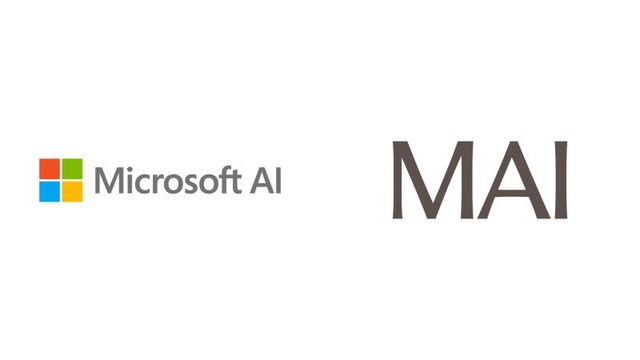
Microsoft's MAI Models Aim for Smarter, More Efficient AI

Microsoft is expanding its MAI (Microsoft AI) family of in-house models across products such as GitHub Copilot, Excel, Outlook, and Microsoft 365. Rather than relying on a single large AI model for every task, the company is using specialised models trained for specific applications.

According to CEO Satya Nadella, this approach improves efficiency, reduces computing costs, and delivers better performance for many real-world tasks. Microsoft says its MAI models learn from actual customer workflows using reinforcement learning and product-specific evaluations.

Frontier models from partners like OpenAI and Anthropic will still be used for complex tasks, while MAI handles routine workloads. This hybrid strategy allows businesses to build faster, more cost-effective AI systems without compromising performance, reflecting a growing trend toward task-specific AI in enterprise applications.

Mapping the Brain's Billions of Roads
SPOTLIGHT

Mapping the Brain's Billions of Roads

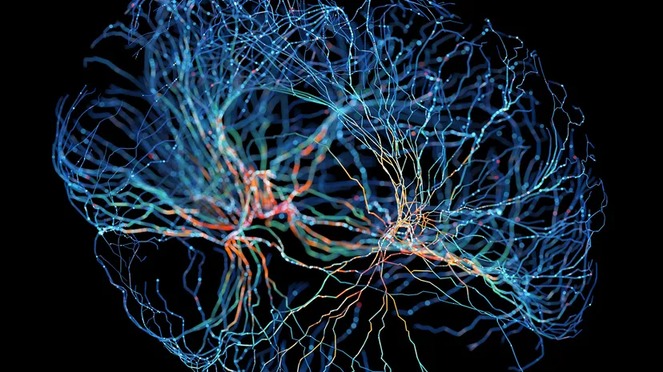
How AI is helping scientists unlock the mysteries of the human brain. Imagine navigating a city without a map. Scientists face a similar challenge when trying to understand the human brain, which contains around 86 billion neurons connected by trillions of synapses.

Connectomics is the science of creating a detailed map of these neural connections, known as the connectome, to better understand how thoughts, memories, emotions, and behaviours emerge. Building such a map is an enormous task, requiring the analysis of vast amounts of data.

Researchers are therefore using artificial intelligence and supercomputers to accelerate the process. A complete connectome could transform our understanding of neurological conditions such as Alzheimer's disease, autism, and depression, paving the way for earlier diagnosis and more effective treatments.

Much like the Human Genome Project revolutionized genetics, connectomics has the potential to reshape the future of neuroscience.

INDIA'S AI ECOSYSTEM, IN MOTION.

IndiaAI Mission
GOVERNMENT INITIATIVE

IndiaAI Mission Opens Global Doors for Indian AI Startups

The IndiaAI Mission has announced the second cohort of its Global Acceleration Programme, selecting 10 promising Indian AI startups to participate in an international programme developed in partnership with Station F in Paris and HEC Paris.

The initiative aims to help startups working in areas such as health tech, climate tech, edtech, satellite intelligence, and cognitive AI expand into global markets through mentorship, networking, and business development support.

The programme includes online preparation followed by an immersive residency in France, where founders gain exposure to international investors, industry experts, and innovation ecosystems.

By enabling Indian startups to build global partnerships and scale their technologies worldwide, the IndiaAI Mission is strengthening India's position as an emerging hub for AI innovation and entrepreneurship.

BuildAI TechPitchSprint
STARTUP ECOSYSTEM

BuildAI TechPitchSprint to Empower India's AI Startups

The IndiaAI Mission, in partnership with the ITEL Foundation, has launched BuildAI TechPitchSprint, a national initiative aimed at identifying and supporting promising early-stage AI startups. The two-day event combines a technical hackathon with a startup pitch competition, giving innovators the opportunity to showcase AI solutions in sectors such as healthcare, manufacturing, agriculture, robotics, MSMEs, and financial services.

Beyond cash prizes, selected startups will receive mentorship, incubation opportunities, and access to investors through the IndiaAI ITEL partnership.

By encouraging young entrepreneurs to develop AI solutions for real-world challenges, the programme reflects India's growing commitment to building a strong, self-reliant AI ecosystem and nurturing the next generation of deep-tech innovators.

RASTHE footpath application
CIVIC TECH

Teen Innovator Develops AI-Powered App to Improve Bengaluru's Footpaths

A 14-year-old student from Bengaluru has developed RASTHE, a mobile app that lets citizens report broken, missing, or poorly maintained footpaths using a simple swipe-based interface. Nicknamed the "Tinder for Footpaths," the app allows users to upload photos, rate pedestrian pathways, and vote on areas that need urgent attention.

Reports are mapped ward-wise, helping civic authorities identify and prioritise infrastructure problems more efficiently. Created using the 10x Apps platform, the project demonstrates how technology can encourage community participation in solving urban challenges.

By turning everyday citizens into contributors of real-time infrastructure data, RASTHE aims to improve pedestrian safety and promote smarter city planning. The initiative has received widespread appreciation online, highlighting how young innovators are using AI-enabled tools to create practical solutions for real-world problems.

Sarvam AI
STARTUP SPOTLIGHT

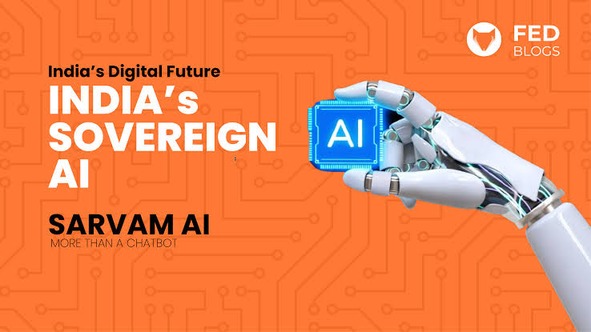
Sarvam AI Brings Artificial Intelligence to Every Indian Language

Sarvam AI is developing artificial intelligence that allows people to interact with technology in their own language, making AI more accessible across India's diverse linguistic landscape. Co-founder Dr. Vivek Raghavan explained that the company has designed its models with India's 22 official languages and numerous regional dialects in mind, while also ensuring the technology remains affordable and efficient for widespread adoption.

The company is currently working on voice-based AI systems that enable users to access digital services through spoken commands, even on feature phones.

This approach has the potential to bridge the digital divide by making AI available to people without smartphones or advanced technical skills. By focusing on inclusivity and language diversity, Sarvam AI is helping shape an AI ecosystem that reflects the needs of millions of Indians.

UNTIL THE NEXT ISSUE.

MADE BY STUDENTS, FOR STUDENTS.

AURA

About the Club

AURA — Artificial Intelligence for Understanding, Research and Application — is the AI club of Saintgits College of Engineering.

COORDINATOR

Faculty Coordinator

Ms. Talit Sara George

PUBLICATION

Publication Schedule

Released on the last Friday of every month.